
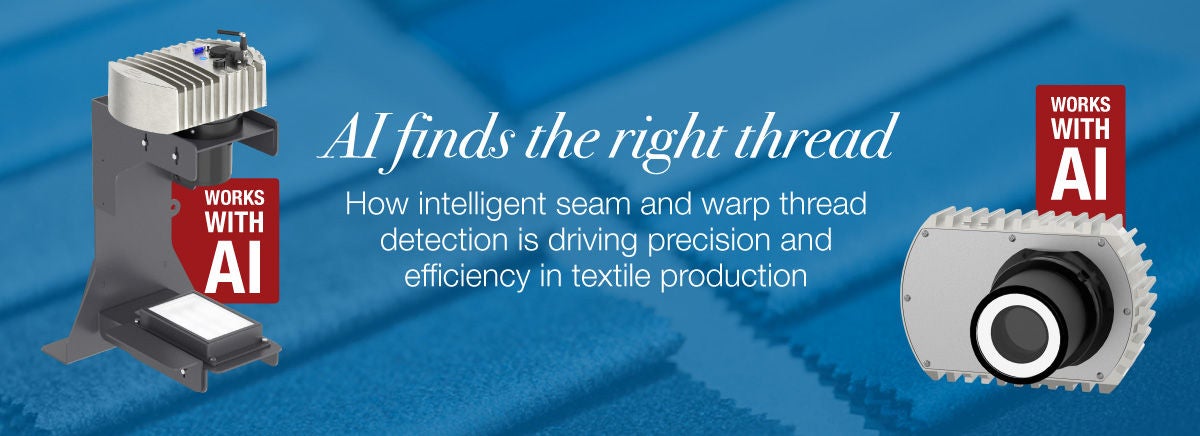
AI in textile production: precision and efficiency with ELSEAMTEX and ELWARP
Artificial intelligence is increasingly developing into a key technology in industrial textile production. Particularly in highly dynamic processes such as digital printing, finishing, or cutting, precise detection and control of the web in real time is required. Conventional sensor systems often reach their limits here because of complex patterns, varying materials, or irregular edge structures. AI-based optical sensors close this gap by interpreting visual information and deriving reliable decision-making bases for process control. In this context, systems such as ELSEAMTEX and ELWARP offer new approaches to automation and quality assurance in textile production on moving webs.
Publication: October 2026
Cross seams and protruding weft threads can significantly impact productivity and product quality in textile manufacturing. With the AI-based sensor systems ELSEAMTEX and ELWARP, Erhardt+Leimer provides advanced solutions for seam detection and warp thread recognition, supporting automated and highly precise process control. ELSEAMTEX enables contactless detection of cross seams on textile webs to automate appropriate action in downstream machine processes, while ELWARP identifies the outermost warp thread directly for accurate edge cutting. By combining optical measurement technology with AI-based image processing, both systems increase process reliability, improve product quality, reduce waste, and support a more efficient, data-driven textile production.
ELSEAMTEX: The intelligent eye for seam detection
The ELSEAMTEX SI 1001 seam sensor is an optical inspection system for contactless detection of seams on textile webs. By using artificial intelligence, the system can reliably identify cross seams on both plain and printed materials.
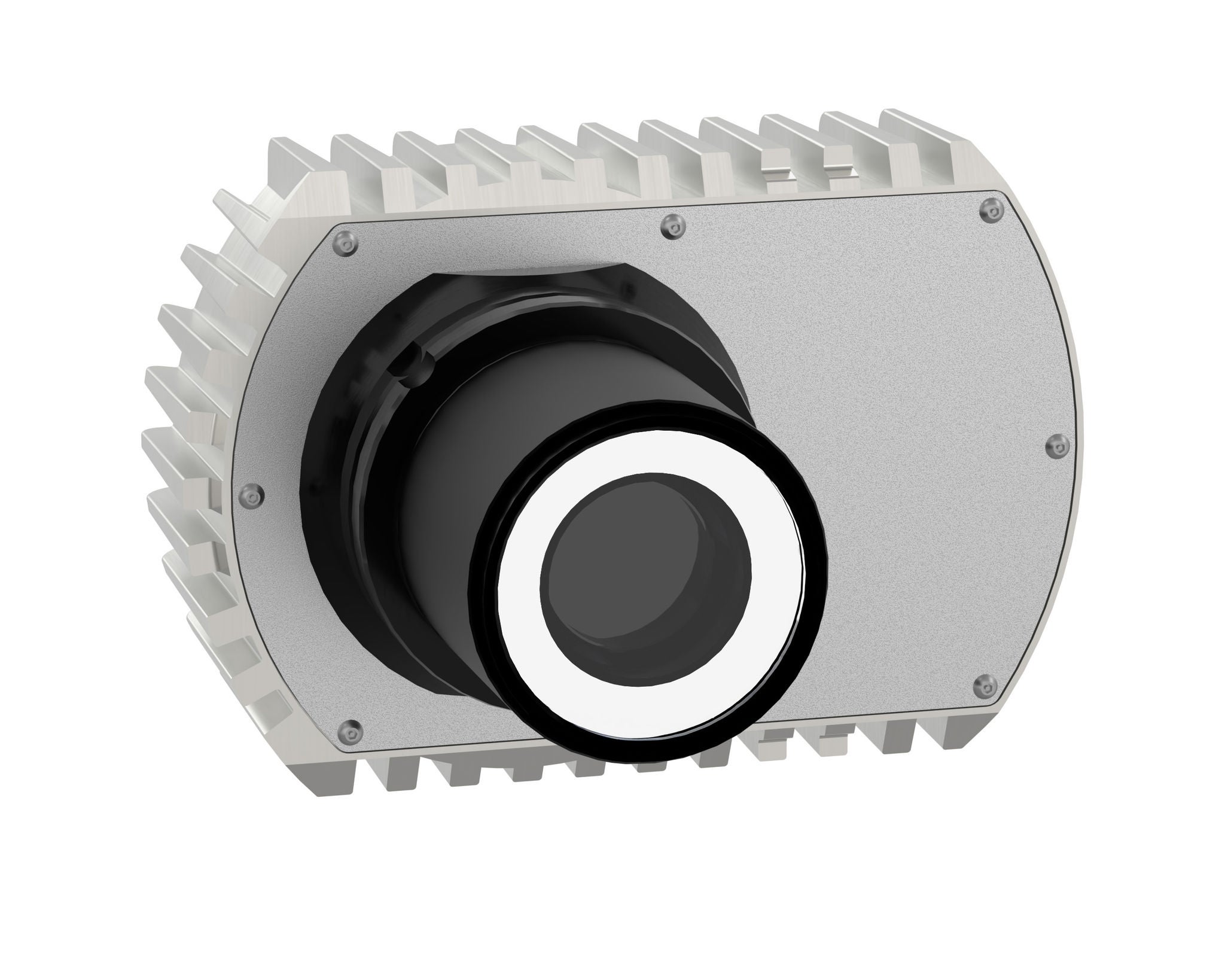
Seam sensor ELSEAMTEX SI 1001
How ELSEAMTEX works
ELSEAMTEX combines a ring-shaped light transmitter with a matrix camera as well as integrated data processing. The AI-based software continuously analyzes the captured image data and detects even complex seam structures with highest precision. The system’s learning capability ensures that detection performance continuously improves during operation and can thus be adapted to specific production conditions. This way, ELSEAMTEX detects seams as reliably as the human eye.
Integration of ELSEAMTEX into industrial processes
As soon as a seam is detected, the sensor generates a digital signal that is directly integrated into the machine control system. In practice, this means that, for example, calender rollers can be opened automatically, shearing blades can be briefly lifted, or printing processes in digital printing machines can be specifically interrupted to avoid material or equipment damage. At the same time, the signal output enables precise processing of production data, such as the automatic start of a new production process with changed parameters after the seam.
The ELSEAMTEX SI 1001 seam sensor is an optical inspection system for contactless detection of seams on textile webs. By using artificial intelligence, the system can reliably identify cross seams on both plain and printed materials.
How ELSEAMTEX works
ELSEAMTEX combines a ring-shaped light transmitter with a matrix camera as well as integrated data processing. The AI-based software continuously analyzes the captured image data and detects even complex seam structures with highest precision. The system’s learning capability ensures that detection performance continuously improves during operation and can thus be adapted to specific production conditions. This way, ELSEAMTEX detects seams as reliably as the human eye.
Integration of ELSEAMTEX into industrial processes
As soon as a seam is detected, the sensor generates a digital signal that is directly integrated into the machine control system. In practice, this means that, for example, calender rollers can be opened automatically, shearing blades can be briefly lifted, or printing processes in digital printing machines can be specifically interrupted to avoid material or equipment damage. At the same time, the signal output enables precise processing of production data, such as the automatic start of a new production process with changed parameters after the seam.
Seam sensor ELSEAMTEX SI 1001
Connectivity and operation of ELSEAMTEX
A key feature of the ELSEAMTEX system is its integrated WIFI card, which enables wireless communication with mobile devices. Using the “E+L AI Manager” app, users can perform software updates, test them live, and retrieve log files. In addition, log and image files can be transferred from the sensor to the mobile device and used to further optimize detection algorithms, thereby supporting a continuous improvement process. The app is available free of charge for both Android and iOS in the Google Play Store and App Store.


ELWARP: Precise warp thread detection without compromise
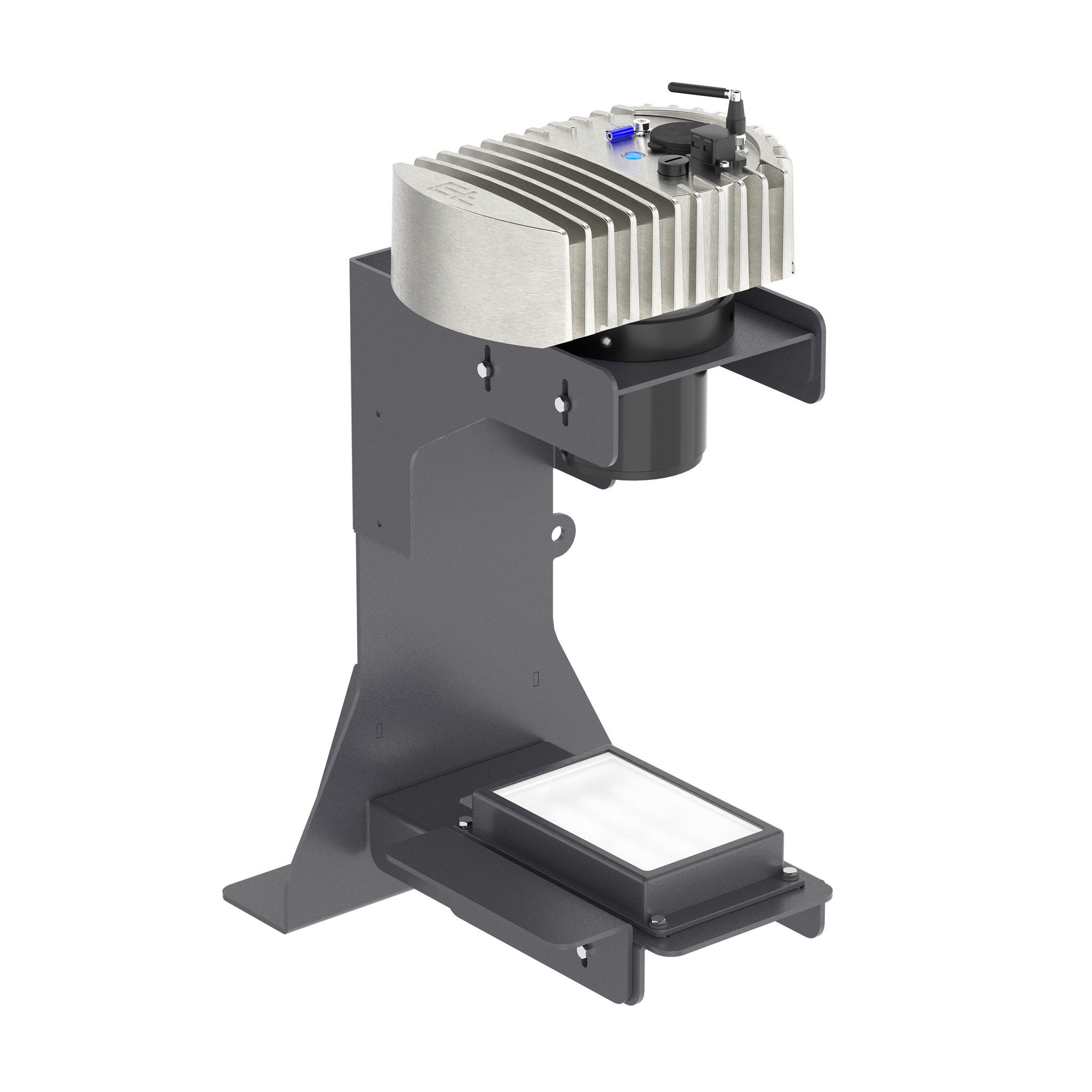
Warp thread sensor ELWARP SI 2001
The ELWARP SI 2001 warp thread sensor addresses a key challenge in textile processing: the exact determination of the outermost warp thread. While conventional systems often rely on the position of protruding weft threads and derive the cutting edge indirectly, ELWARP focuses directly on the relevant warp thread and thus enables significantly more precise control of downstream processes such as cutting units.
The technological approach of ELWARP
The system combines incident light and transmitted light methods with AI-based image processing. A matrix camera captures the material edge, while an additional light transmitter creates targeted contrasts to make the thread structure visible. Artificial intelligence analyzes this data and reliably identifies the outermost warp thread, regardless of how long or irregular the protruding weft threads are. This direct detection represents a fundamental difference from conventional methods and creates the basis for significantly higher cutting accuracy and process stability.
Warp thread sensor ELWARP SI 2001
Process integration and operation of the ELWARP system
The position of the warp thread determined by the sensor is continuously transmitted to higher-level control systems. On this basis, for example, a blade follow-up at the stenter exit can be implemented, allowing protruding weft threads to be removed at the exact desired distance. At the same time, the technology enables more precise control, as it no longer relies on approximated edges but on the actual material structure. For optimal functionality, it is necessary to bring the weft threads into a defined position before measurement, which can be achieved through mechanical or pneumatic spreading processes. ELWARP is also equipped with a WIFI card and can be operated using the “E+L AI Manager” app. With the app users can update the sensor, adjust parameters, and continuously optimize system performance.
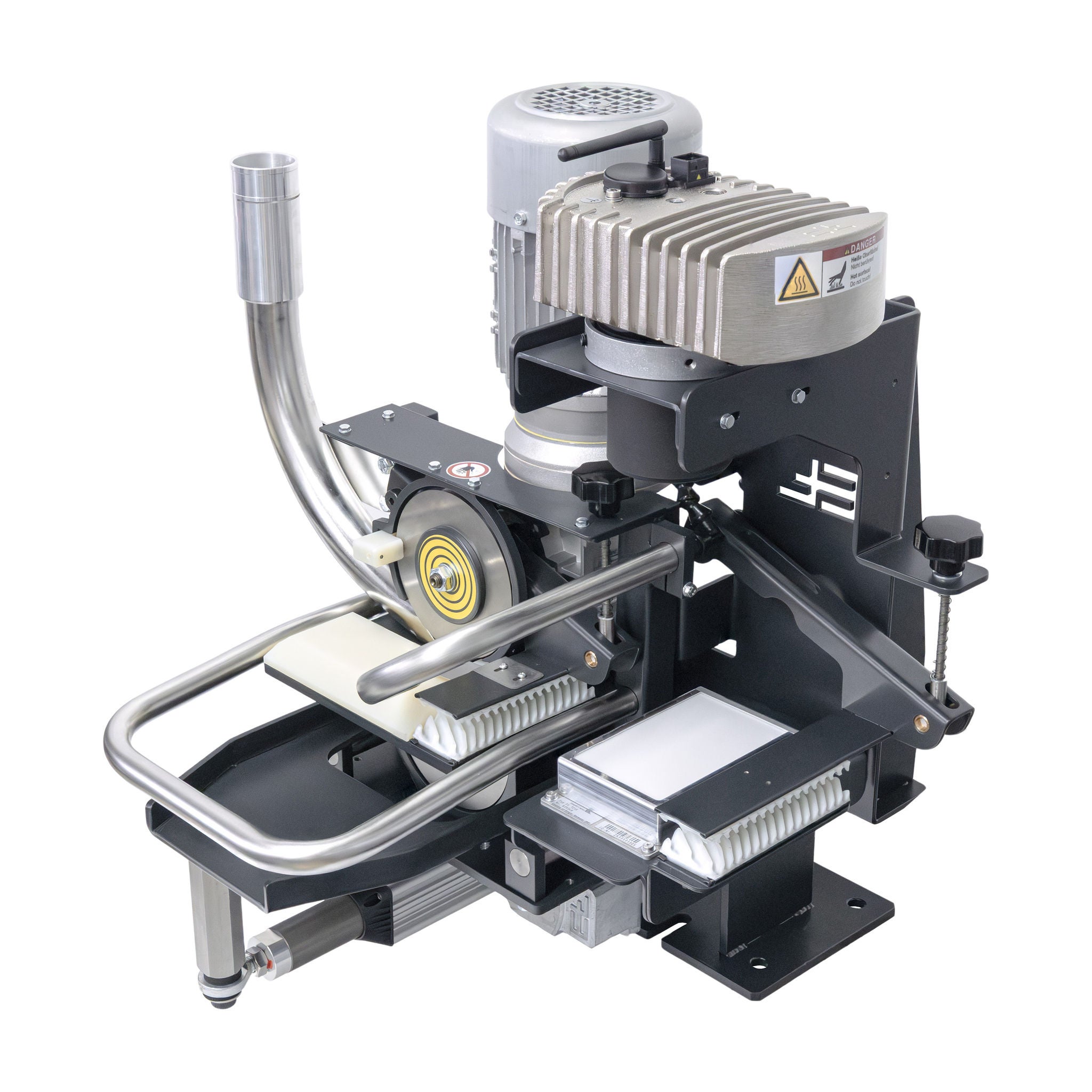
ELWARP with downstream cutting unit ELCUT BT 82
Digital printing as an application example for ELWARP
Especially in digital printing, it is important that no weft thread protrudes from the textile composite. The risk that a thread caught by the print head not only damages the textile surface but subsequently also destroys the print head itself is simply too high, and the consequences are extremely costly: a new print head incurs five-figure costs, not even including the expenses for downtime and repair. No one can afford such a major production failure today. Therefore, maximum precision is required in this case. This is where Erhardt+Leimer’s AI comes into play. The ELWARP sensor camera precisely detects the outermost warp thread and aligns the cutting blade accordingly. Until now, the industry has relied exclusively on an offset from the fabric edge to get as close as possible to the edge of the textile surface. For the production process, this means working with a safety margin only. This may work – but it does not have to. In the best case, too much is cut off; in the worst case, the margin is insufficient to prevent a disaster. ELWARP delivers a significantly more precise result here.
Process integration and operation of the ELWARP system
The position of the warp thread determined by the sensor is continuously transmitted to higher-level control systems. On this basis, for example, a blade follow-up at the stenter exit can be implemented, allowing protruding weft threads to be removed at the exact desired distance. At the same time, the technology enables more precise control, as it no longer relies on approximated edges but on the actual material structure. For optimal functionality, it is necessary to bring the weft threads into a defined position before measurement, which can be achieved through mechanical or pneumatic spreading processes. ELWARP is also equipped with a WIFI card and can be operated using the “E+L AI Manager” app. With the app users can update the sensor, adjust parameters, and continuously optimize system performance.
Digital printing as an application example for ELWARP
Especially in digital printing, it is important that no weft thread protrudes from the textile composite. The risk that a thread caught by the print head not only damages the textile surface but subsequently also destroys the print head itself is simply too high, and the consequences are extremely costly: a new print head incurs five-figure costs, not even including the expenses for downtime and repair. No one can afford such a major production failure today. Therefore, maximum precision is required in this case. This is where Erhardt+Leimer’s AI comes into play. The ELWARP sensor camera precisely detects the outermost warp thread and aligns the cutting blade accordingly. Until now, the industry has relied exclusively on an offset from the fabric edge to get as close as possible to the edge of the textile surface. For the production process, this means working with a safety margin only. This may work – but it does not have to. In the best case, too much is cut off; in the worst case, the margin is insufficient to prevent a disaster. ELWARP delivers a significantly more precise result here.
ELWARP with downstream cutting unit ELCUT BT 82
Added value through AI-based sensor technology in the textile industry
The combination of optical measurement technology and artificial intelligence opens new potential for the automation of textile production processes. Systems such as ELSEAMTEX and ELWARP demonstrate that even complex challenges such as reliable seam detection or precise edge detection can be solved using data-driven methods. This leads to greater process reliability, as relevant events are detected precisely and immediate action can be taken. In addition, such an optimized process results in higher end-product quality and less waste in production. At the same time, machine components are protected because precautionary measures are fully automated and no longer depend on the attention of the machine operator. For textile manufacturers, this means less wasted resources, less wear on production equipment, and ultimately higher profitability. In addition to direct process control, AI components in textile production enable holistic optimization along the value chain. By integrating AI-supported process analysis, patterns in material consumption, energy demand, and maintenance cycles can be identified across multiple production lines. This semantic linking of data sources – from raw materials to final inspection – creates transparency and enables proactive resource planning. But the potential of AI sensors is far from exhausted. Their flexibility regarding different materials, designs, and production conditions continues to increase as their AI models continuously learn. ELSEAMTEX can already draw on over 100,000 different seams, and ELWARP has already been trained with over 50,000 warp threads. Each additional dataset further expands their range of applications and makes their results even more precise and reliable.
Digital services beyond production: the MY E+L platform
In addition to automation and digitalization in the production process, digital infrastructure is also becoming increasingly important when it comes to procuring production equipment. Here, too, Erhardt+Leimer offers top performance to its customers. The MY E+L online shop provides a central platform through which users can access product-related information, software, and services, and order products or spare parts online. This not only simplifies the procurement of components but also supports the maintenance and operation of installed systems. So it is definitely worth taking a look: https://shop.erhardt-leimer.com/

Bernd Wildegger
Textile Division Manager
b.wildegger@erhardt-leimer.coM
+49 821 24 35-0
Bernd Wildegger
Textile Division Manager
b.wildegger@erhardt-leimer.coM
+49 821 24 35-0
Frequently Asked Questions (FAQs)
ELSEAMTEX is an AI-based seam sensor for the optical, contactless detection of seams on textile webs. It is primarily used in industrial production processes to reliably identify cross seams and automatically control downstream machine processes.
ELSEAMTEX uses a combination of a ring-shaped light transmitter and a matrix camera to capture image data from the material web. This data is analyzed by AI algorithms, enabling the detection of even complex seam structures, regardless of whether the material is plain or printed.
AI-based seam detection helps automate downstream processes, protect machine components, and reduce production costs. At the same time, the system continuously adapts to new conditions.
The sensor is used in applications such as calenders, shearing machines, and digital printing presses. It ensures that actions such as opening rollers, lifting blades, or interrupting printing processes take place at exactly the right moment when a seam is detected.
ELWARP is an AI-based warp thread sensor that detects the outermost warp thread on textile webs. It solves the problem that conventional sensors cannot precisely determine the edge of the material web due to protruding weft threads, enabling control based directly on the actual outermost warp thread.
While conventional systems determine the cutting edge using an offset from the outer edge of the protruding weft threads, ELWARP detects the outermost warp thread directly. This eliminates uncertainty caused by safety margins and significantly increases cutting accuracy.
In digital printing, protruding weft threads can be caught by the print head and damage it. ELWARP ensures that these threads are removed precisely by aligning the cutting system exactly to the outermost warp thread. This helps prevent costly downtime and quality issues.
ELWARP combines the incident light method and transmitted light method with AI-based image processing. This enables the sensor to reliably identify the relevant warp thread even in complex material structures and transmit its position to the controller.
The app enables easy operation and maintenance of the sensors. Users can install software updates, test new versions, and access log and image files. This also supports the continuous optimization of the AI models.
AI sensors such as ELSEAMTEX and ELWARP increase process reliability, improve product quality, and reduce waste. At the same time, they enable more efficient use of resources and support data-driven optimization throughout the value chain by capturing previously inaccessible production data and making it available for analysis.